



Saudi Arabia wants iconic American institutions, and is willing to use a blend of money and muscle to get them.
In a letter sent to Congress last week, PGA Tour Commissioner Jay Monahan lamented an “intense battle” with LIV Golf, the 2021-founded professional gold tour backed by the Saudi Public Investment Fund (PIF), saying his organization was left on its “own to fend off the attacks, ostensibly due to the United States’ complex geopolitical alliance with the Kingdom of Saudi Arabia.”
“The difficult negotiations we have undertaken with the Saudis and the agreement in principle we have reached will accomplish important goals that protect the game and the important work of the PGA Tour in the United States,” wrote Monahan. “Rather than a foreign funded entity taking over an American sport, the end result is that the PIF has agreed to work within the existing golf ecosystem as a minority investor with the PGA TOUR in full control.”
Today, only several days since the commissioner’s letter, the PGA announced Monahan would be taking an unexplained medical leave.
The controversial PGA-LIV merger is one more flashy tool the Kingdom can wave to position itself as a tourist hot spot and rising global leader.
“Saudi Arabia is trying to return to becoming more of a player internationally and recover its reputation,” Del Wilber, a security specialist and former U.S. government operative based in the Middle East, tells Paradox. “Involving themselves in more mainstream endeavors like LIV/PGA is just one way they are trying to repair their image and achieve this.”
The PIF has ramped up its presence into the sports arena at dizzying speed in recent months – hosting a Formula One Grand Prix, high-profile boxing matches, signing a major partnership deal with state oil giant Aramco, and luring in international greats such as Cristiano Ronaldo and Karim Benzema. Bloomberg reported that the fund even attempted to purchase the iconic F1 brand, after buying up British Premier League soccer team Newcastle United in 2021.
The Saudi Royal investment fund purchasing iconic American cultural institutions by slowly bribing American talent with exorbitant contracts to perform in shitty, caricaturized versions until the real thing merges with the fake thing… I do not think this is a good development.
— Ben Collins (@oneunderscore__) June 6, 2023
The last time I visited Saudi Arabia was in the scorching summer of 2018, in between assignments in war-ravaged Yemen. Back then, it was a laborious back-and-forth-to-the-consulate to obtain a visa. The state-owned airline separated ladies and gents, and we all embarked on a joint prayer from the Quran pre-flight. My local contacts insisted I cover my head and blend in with the other women in a black abaya. I had to dine in the “family” section at restaurants, given that men and women could not intermix. My arrival in Riyadh coincided with the week women were allowed to drive in the staunchly conservative 91-year-old Kingdom for the first time.
My trip this spring saw a return to a very different country. For starters, law mandates that foreign women need not cover their heads, and nobody offered a second glance to those of us with exposed locks. Modest dressing was encouraged, but the ebon abaya is no longer the norm. Vivid florals replaced the conservative bloc-color aesthetic alongside women’s business suits, designer heels and an almost New York-style sophistication. Even giant billboards spawning the country’s second-largest city, Jeddah, feature a hijab-free, cut-off shirt promoting the tourist draw card of a warm winter in Saudi Arabia.
Women smoked in public, shared public spaces and restaurants with male friends and counterparts, and openly discussed dating apps and the tribulations of their dating lives. Almost everyone you met spoke crisp English and has worked, toured and studied abroad. Moreover, the Kingdom removed the public prohibition on cinemas and actively encourages mixed-gender events, including large-scale sporting events and concerts. State-of-the-art cities and communities are being built from the ground up, with high-end restaurants and Rodeo Drive stores snaking around ancient relics dating back to the earliest emergences of human civilization.
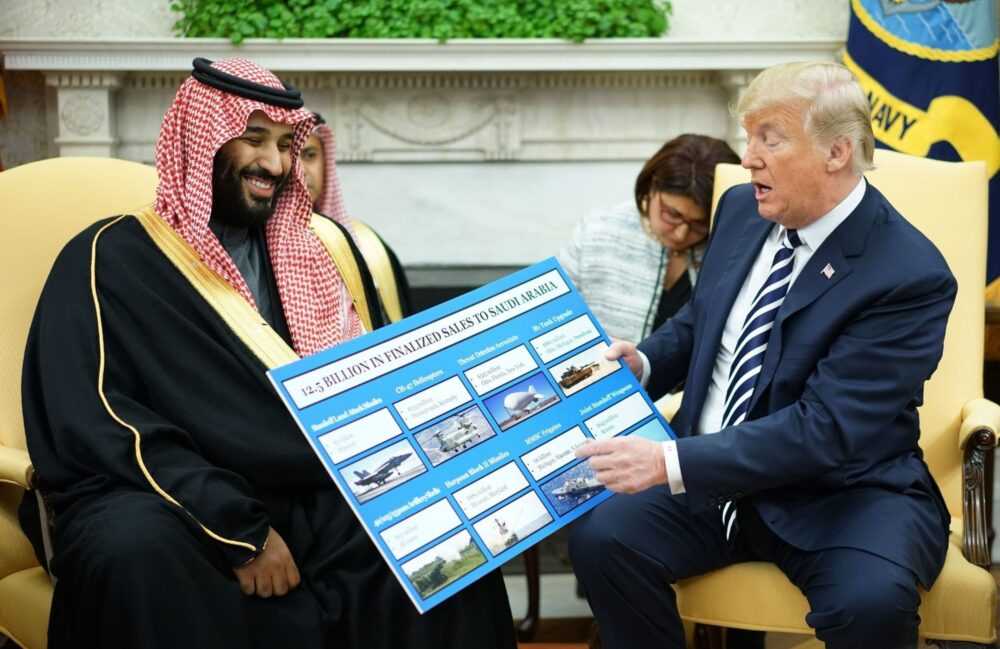
These sweeping amendments, coupled with the PGA-LIV merger, are not just a product of happenstance but pieces of the much larger, highly-refined and aggressive “Vision 2030” – the contrivance of Saudi Arabia’s de facto leader, Crown Prince Mohammad bin Salman, better known as MBS. The unveiled strategy promised to reduce the Kingdom’s reliance on oil revenue, wrench open Saudi heritage and Islamic culture to the broader world, and imbue a much more potent sentiment of national pride and patriotism.
“The crown prince’s vision is to modernize Saudi Arabia both internally and externally, and one vertical for doing that is sports and entertainment,” Rich Goldberg, a senior advisor at Washington DC think-tank the Foundation for Defense of Democracies (FDD), tells Paradox. “Golf is a brand and it’s clearly the kind of brand MBS wants for the kingdom. Golf continues to grow worldwide but also maintains its traditional, high-brow, society influencing base.”
Following the PGA-LIV merger, the Saudis are expected to launch a bid to host the 2030 World Cup. I have always said through my years as a foreign correspondent that sports are the universal language, that no matter where you are in the world, something as simple as a soccer ball has the power to unite from far and wide. Although the Saudis themselves aren’t exactly known for their athletic prowess, they have the finances and will to become the center of the sporting area as one more chip in the broader strategy as a potent player on the world stage.
Business with the Kingdom doesn’t come without the trail of controversy, especially in the still-simmering wake of the Saudi murder of writer Jamal Khashoggi in Istanbul in 2018. Furthermore, fifteen of the nineteen hijackers on September 11 were Saudi citizens. Of course, victims’ families have yet to see a dime from Riyadh or profit from the PGA/LIV consolidation.
Nonetheless, money talks. And the Saudis have more than enough to buy their way out of any communications crisis and take up a prime position as a diverse and powerful force for the future.
